Table Of Content
- Wrecked Costa Concordia liner makes its final journey
- Dozens of passengers leave cruise ship in Italy after COVID outbreak
- Wrecking Near the Shore
- The luxury cruises heading into forbidden Russia and deepest Antarctica
- Passengers and personnel
- ‘I have lived the most beautiful lives and died the most beautiful deaths’
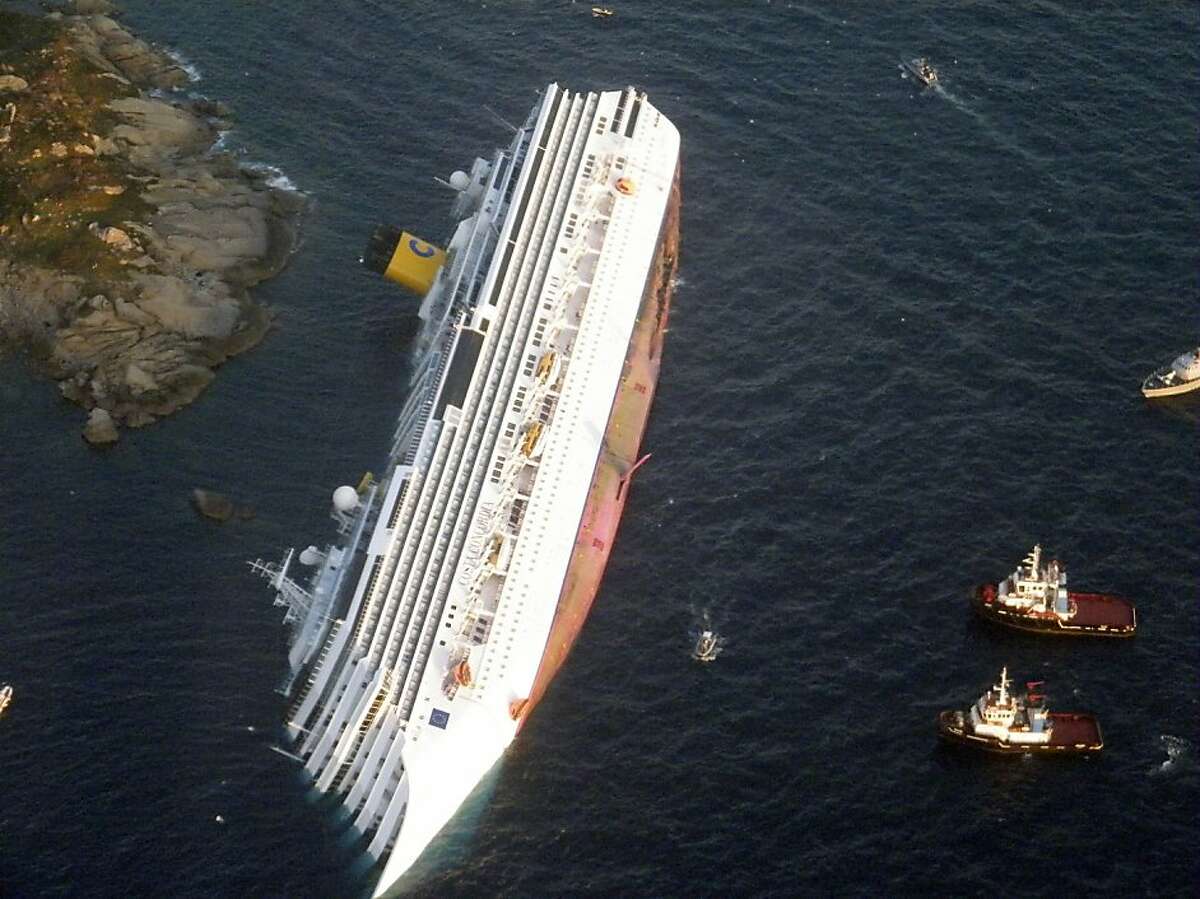
In July 2014 the Concordia—outfitted with a number of steel containers serving as flotation devices—was towed to Genoa, Italy, where it was dismantled for scrap. Almost immediately questions were raised concerning the conduct of Schettino and other crew officers. In July 2013 four crew members and Costa Crociere’s crisis coordinator pled guilty to various charges, including manslaughter. He was charged with manslaughter as well as causing the wreck and abandoning ship. During the 19-month trial, prosecutors claimed that he was an “idiot,” while Schettino countered that his actions had saved lives and that he was being scapegoated.
Wrecked Costa Concordia liner makes its final journey
In the months to come, salvage teams set up camp in the picturesque harbor to work on safely removing the ship, an operation that took more than two years to complete. GIGLIO, Italy (AP) — Ten years have passed since the Costa Concordia cruise ship slammed into a reef and capsized off the Tuscan island of Giglio. But for the passengers on board and the residents who welcomed them ashore, the memories of that harrowing, freezing night remain vividly etched into their minds.
Dozens of passengers leave cruise ship in Italy after COVID outbreak
Then the ship rolled again, now listing to the right, and the captain ordered the ship to be abandoned. "The boat started shaking. The noise - there was panic, like in a film, dishes crashing to the floor, people running, people falling down the stairs," said survivor Fulvio Rocci. “We are not going to save lives if we don’t change the standards in the whole industry, not only of this particular captain,” he added.

Wrecking Near the Shore
Cruise Ship's Salvage A Wreck For Italian Island - NPR
Cruise Ship's Salvage A Wreck For Italian Island.
Posted: Sat, 14 Jul 2012 07:00:00 GMT [source]
Several of the ship’s crew, notably Capt. Francesco Schettino, were charged with various crimes. NBC News correspondent Kelly Cobiella caught up with a group of survivors on TODAY Wednesday, a decade after they escaped a maritime disaster that claimed the lives of 32 people. The Italian cruise ship ran aground off the tiny Italian island of Giglio after striking an underground rock and capsizing. Costa Concordia was declared a "constructive total loss" by the cruise line's insurer, and her salvage was "one of the biggest maritime salvage operations". On 16 September 2013, the parbuckle salvage of the ship began, and by the early hours of 17 September, the ship was set upright on her underwater cradle. In July 2014, the ship was refloated using sponsons (flotation tanks) welded to her sides, and was towed 320 kilometres (200 mi) to her home port of Genoa for scrapping, which was completed in July 2017.
Captain Schettino and the sinking of the Costa Concordia - video report - The Guardian
Captain Schettino and the sinking of the Costa Concordia - video report.
Posted: Wed, 11 Feb 2015 08:00:00 GMT [source]
More than 60 people drown after a migrant vessel capsizes off Libya, U.N. says
I remember it was a beautiful night, a starry night, the sea was very calm and quiet. The youngest victim of the disaster was a five-year-old girl named Dayana Arlotti, who drowned with her father after they were told there was no space in a lifeboat. De Falco became such a hero that, when it emerged more than a year later that he had been transferred out of operational service into a desk job, his apparent mistreatment created a new spate of soul-searching in Italy. Some suggested the country did not know how to reward people who showed good character. “I did that to calm the passengers down, I feared that otherwise there would be panic,” Schettino said in his defence at trial.
"Everything happened really fast. Everybody tried to get a life boat and people started to panic. A lot of people were falling down the stairs and some were hurt because things fell on them. "It was difficult to walk. First it moved once, then to the left and then more on the right. The boat was tipping one side. You could see the ship was sinking more and more. In half an hour it sank halfway into the water," she said. A pre-trial report, leaked to Italian media weeks before the trial, places much of the blame on Schettino. “We are losing sight of the victims of this tragedy, but they could line the pockets of the shamed captain,” the member said. An angry member of an Italian consumer association told NBC News it would be raising a formal objection to Schettino’s presence in court. As befitting a star attraction, the captain arrived Monday at the makeshift courthouse through the back door in a car with darkened windows.
Schettino is one of nine people facing charges, although eyewitnesses, leaked audio and video recordings, a pre-trial report and even the liner’s owners, Costa Crociere (a subsidiary of Miami-based Carnival), appeared to put the blame squarely on him. The case of Francesco Schettino, 51, was of such enormous interest that a theater had to be turned into a courtroom in the Tuscan city of Grosseto to accommodate all those who had a legitimate claim to be at the closed-door hearing over the disaster. When I got there I found myself with other crew members and passengers on this huge dancefloor. We were expecting some instructions, some kind of explanation, but the ship began to have multiple blackouts and power failures. On the tenth anniversary of the tragedy, the ship's Italian pianist Antimo Magnotta, who is now living and working in London, has relived his terrifying ordeal and told Sky News how he is still tormented by flashbacks from what he witnessed. Ten years on from the tragedy, Antimo Magnotta has revealed how he still has "terrible flashbacks" and can remember people's screams as the enormous vessel tipped over off the coast of Italy.

Eyewitnesses have described scenes of chaos on board the Italian cruise ship the Costa Concordia, which has run aground off Italy, killing at least five people. It is alleged Schettino was in command when he steered the gigantic ship too close to Giglio coastline, allegedly to perform a maritime salute to grant a favor to the ship’s head master, who was originally from the island. I was not alone of course, there was a bunch of between 35 to 40 people around me, passengers and crew members. Francesco Schettino, the captain of the cruise liner, was jailed for 16 years for multiple manslaughter after the disaster that left 32 people dead. On 13 January 2012, the Italian cruise ship Costa Concordia capsized off the coast of Tuscany after hitting a rock in the Tyrrhenian Sea. The salvage of the Costa Concordia was the most expensive such operation in history, with an estimated cost of $1.2bn.
About 20 minutes later, even as hundreds of passengers continued to await rescue, Schettino abandoned his post and left his second in command in charge of the evacuation. Twelve minutes later, the latter also abandoned his post, with about 300 passengers still on board. It was a national drama with an eccentric cast of characters – a reckless villain, his secret lover and a hard-done-by hero – that has riveted the country for three years. The hulking mass of the capsized 115,000-tonne cruise ship, which for 900 days lay seemingly unmovable and partly submerged in the Mediterranean, became a metaphor for the political and economic ills of an entire nation.
For Concordia survivor Georgia Ananias, the COVID-19 infections are just the latest evidence that passenger safety still isn’t a top priority for the cruise ship industry. Passengers aboard the Concordia were largely left on their own to find life jackets and a functioning lifeboat after the captain steered the ship close too shore in a stunt. He then delayed an evacuation order until it was too late, with lifeboats unable to lower because the ship was listing too heavily. In the final days of a trial, which began in July 2013 and included more than 69 hearings, attorneys for Schettino described him as a scapegoat who had been vilified but deserved to be treated like a hero. Schettino argued that he fell into a lifeboat because of how the ship was listing to one side, but this argument proved unconvincing.
"For us islanders, when we remember some event, we always refer to whether it was before or after the Concordia," said Matteo Coppa, who was 23 and fishing on the jetty when the darkened Concordia listed toward shore and then collapsed onto its side in the water. Ananias and her family declined Costa’s initial $14,500 compensation offered to each passenger and sued Costa, a unit of U.S.-based Carnival Corp., to try to cover the cost of their medical bills and therapy for the post-traumatic stress they have suffered. But after eight years in the U.S. and then Italian court system, they lost their case. “For us islanders, when we remember some event, we always refer to whether it was before or after the Concordia,” said Matteo Coppa, who was 23 and fishing on the jetty when the darkened Concordia listed toward shore and then collapsed onto its side in the water. "There was really a melee there is the best way to describe it," he told Cobiella.
Monica, a German passenger who was in the cruise liner's theatre when the ship began to suffer problems, said it was hard to reach the lifeboats. Mr Ordona said his colleagues and passengers were waiting to use lifeboats but the change in the direction the boat was sinking prompted them to seek lifeboats on the other side of the ship. An Indonesian helmsman, for instance, failed twice to understand orders, veering to the right instead of the left as he was told by Schettino, who joked he should pay closer attention or “we will go on the rocks,” only minutes before they dram aground. But the experts -- two admirals and two engineers -- also note that evacuation drills had not been undertaken by all passengers on the ship and not all crew members understood Italian, the operating language of the liner. Monday’s hearing was the first and most important in a preliminary trial, aimed at establishing who should be indicted over the disaster.
A massive storm, nicknamed Cleopatra by Italian meteorologists, hit Grosseto a couple of hours after the hearing began, dumping rain on members of the media waiting outside. Over the next few days experts, who were appointed at an earlier hearing in March, will present their analysis of the data retrieved from the black box, audio recordings and other on-board equipment. I took up a new form of self-therapy and started writing, and I would cry sometimes of course. Eventually a little rescue boat was sent for us, and I will always say, jumping in this little rescue boat was like jumping back to life. I knew where the life raft I was supposed to get on was located, and I knew it would now be under water.




No comments:
Post a Comment